If your leadership asks, “What did this event do for revenue,” your answer should be simple: meetings, pipeline, revenue.
As a GTM team attending, you turn presence into outcomes.
Track the right event marketing KPIs across your CRM, your event app signals, your social media platforms, and post event surveys, then tie them to opportunities and closed-won deals. That is how you show the success of your event to the C-Suite.
TLDR: Key Takeaways
- Event marketing KPIs prove event ROI when they connect meetings, lead generation, pipeline, and revenue, not just event attendance.
- Go beyond headcount. Track ticket sales for owned activations, event sales, revenue generated, and event metrics that ladder to growth.
- Use CRM plus event technology signals from an event app to quantify attendee engagement and satisfaction across in person, virtual events, and hybrid events.
- Pair net promoter score nps with qualitative feedback to measure event success and guide the next event mix by event format.
- Apply insights from event marketing strategies, your event website, social media engagement, and previous events to prioritize future events and improve event performance.
Why tracking event KPIs matters when you attend
You’re investing time, travel, and sponsorship dollars to meet ICP accounts. Tracking the right key performance indicators gives your C-Suite a direct line of sight from event marketing efforts to revenue. Start with outcomes you can defend in a boardroom:
- Meetings requested, accepted, and held with ICP accounts
- Leads generated and qualified by stage
- Opportunities created, influenced, and win rates
- Revenue generated and event profit from event-sourced and event-touched deals
When you measure event success this way, you can compare performance across multiple events and decide which future events deserve a bigger presence.
The attendee scorecard: KPIs that roll up to revenue
1) Meetings and pipeline
- Meetings booked pre event, onsite meetings completed, follow-up meetings scheduled
- Opportunity creation rate from meetings, opportunity velocity, and time-to-close
- Pipeline value influenced
Velocity proof points: 72 percent of marketers say prospects close faster after attending events, and 31 percent report an average sales cycle shortened by about 20 days.
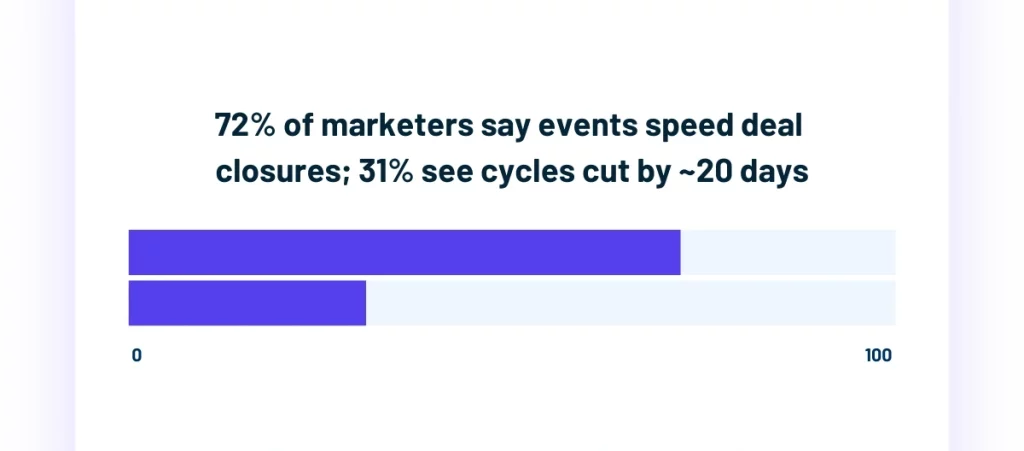
Use these benchmarks when you measure event success.
2) Revenue and profitability
- Revenue generated and contribution to company revenue
- Margin by program, for example, sponsored lounges, demos, or executive dinners where you own ticket sales or upsells
- Event ROI at the opportunity cohort level, not just aggregate
3) Engagement metrics you do not need the organizer to provide
- Event app interactions with your brand profile, session saves, and messages with your staff
- Session participation for your sponsored sessions or interactive sessions
- Social media engagement and social media mentions tied to your event marketing campaigns
Adoption signals: More than two-thirds of attendees, 68 percent, say a mobile event app is essential to their overall event experience.
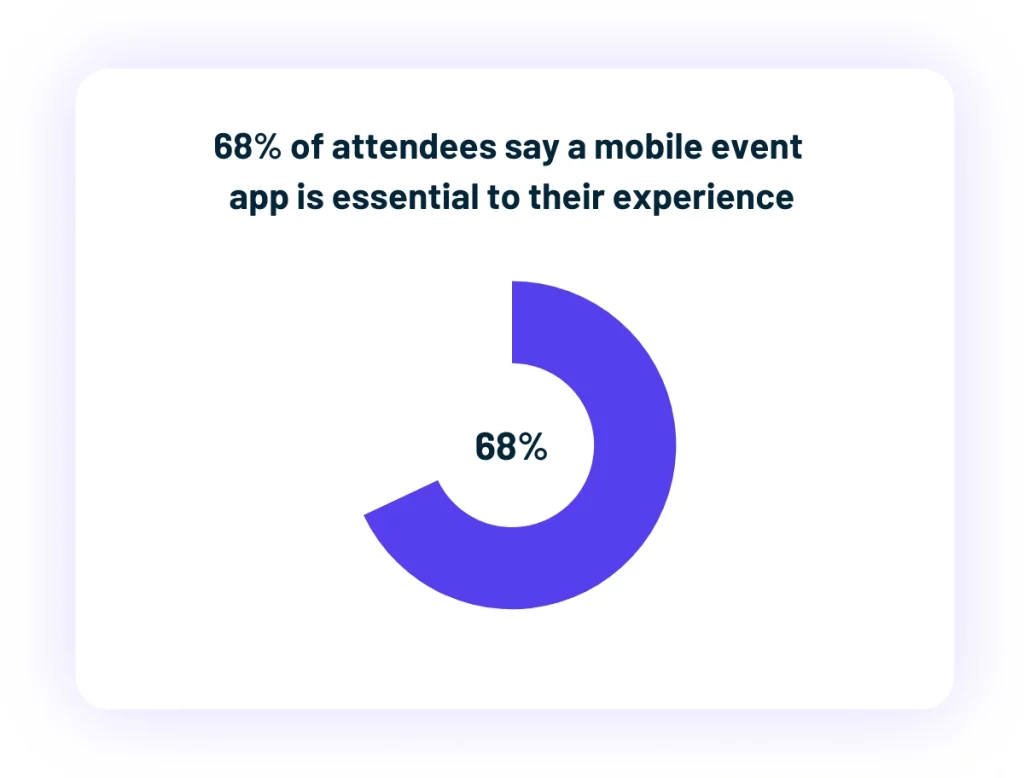
That is why app-driven engagement metrics belong in your event kpis.
4) Satisfaction and advocacy
- Net promoter score for your experiences, for example, your sponsored events, dinners, or workshops
- Attendee satisfaction from post event surveys and qualitative notes from meetings
- Retention and re-registration for your next event touchpoint or product webinar
5) Channel attribution that earns budget
- Conversion rates from marketing channels to attendee registration for your side activations
- Registration page to event registration form completion for your hosted experiences
- Website traffic and content engagement from your event website hub
Tools attendees can use to track event KPIs
You do not need to run the conference to track outcomes. Use your stack.
- CRM as source of truth: log meetings, contacts, and opportunities. Attribute event-sourced and event-touched revenue.
- Event management software and event platforms data exports: pull attendee engagement where available, then push to CRM.
- Event app analytics: messages, favorites, check-ins, and networking features become engagement metrics.
- Attribution and automation: UTMs on landing pages, unique QR codes at the booth, badge scans, and automated enrichment.
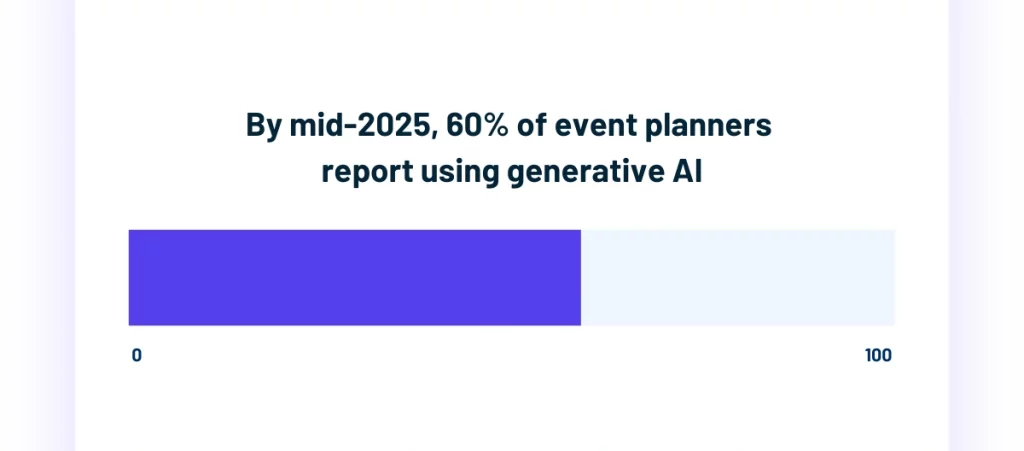
- AI accelerators: by mid-2025, nearly 60 percent of event planners report using generative AI. For attendees, that means AI-assisted lead scoring and summaries are reasonable KPIs to include.
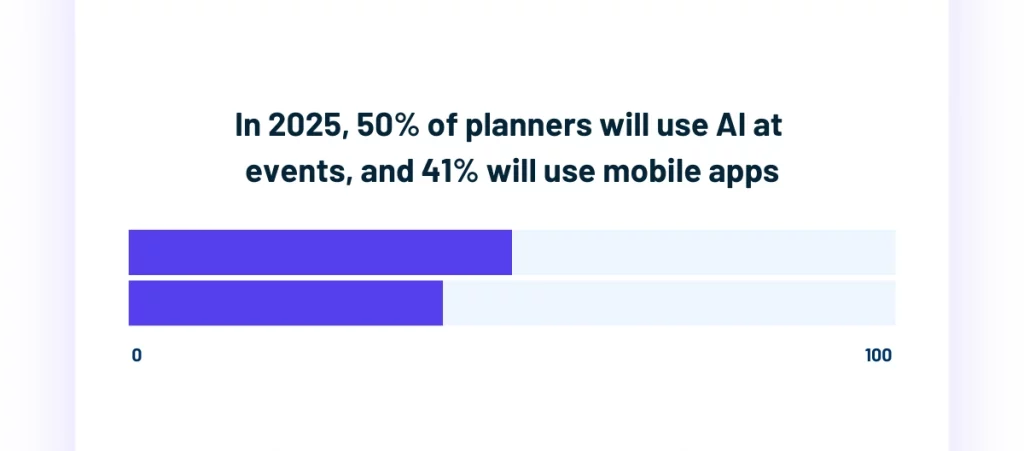
- Half of event planners say they will use AI in 2025 and 41 percent plan to rely on mobile event apps, so expect cleaner data to flow to your team.
How to present KPIs to the C-Suite
- Lead with revenue math: revenue generated, pipeline influenced, net new logos, event’s effectiveness by segment.
- Show velocity and conversion: meetings to SQL, SQL to opportunity, opportunity to win, days saved.
- Anchor with satisfaction: net promoter score, attendee satisfaction, comments from buyers.
- Add reach and influence: social media analytics, website traffic lifts, engagement metrics.
- Decide the portfolio: cut low-yield shows, double down on events where your event kpis outperformed, and set targets for the next event.
KPI checklist for teams who attend
- Event goals aligned to ICP outcomes
- Track event kpis in CRM, plus app and social data stitched with UTMs
- Meetings held, leads generated, opportunities created, revenue generated
- Ticket sales and revenue streams for your owned activations
- Event costs, margin, and event ROI by cohort
- Event app engagement, session participation, attendees engaged
- Net promoter score, post event surveys, attendee feedback
- Social media engagement and website traffic lifts
- Benchmark vs previous events and a decision for future events
Where event organizers fit in your reporting
You do not need organizers to run your analytics, but collaborating can unlock additional valuable insights, for example session tracking, heatmaps, or opt-in contact lists from sponsored segments. Use organizer exports as optional inputs to enrich your own event performance view.
How Vendelux helps you prove event ROI
Vendelux is event intelligence plus meetings automation for teams who attend. You match ICP accounts to upcoming shows using confirmed attendee data, then automatically book meetings before you land. Push every meeting and contact into Salesforce or HubSpot so finance can see the revenue generated.
- Identify which events will have your target audience and potential clients
- Fill calendars with high-intent meetings, then attribute pipeline and revenue
- Compare performance across multiple events with clean, reproducible metrics
This is how you turn attendance into a successful event outcome the C-Suite can trust.
Take control of your event marketing kpis and make them impossible to ignore. Book a demo and connect every event to measurable outcomes.
Frequently asked questions
What are the most important event KPIs for attendees
Meetings held, opportunities created and influenced, win rates, revenue generated, plus attendee engagement and net promoter score as supporting signals. These are the important event KPIs that align with financial success.
How do we measure event ROI if we did not organize the conference
Use your CRM as the ledger. Attribute meetings and lead generation to opportunities and closed-won. Layer in event app analytics, website traffic, and registration form conversions from your owned activations.
Which signals predict revenue best
Completed meetings, follow-up meetings scheduled, high-intent app interactions, and session participation for your sponsored sessions. These outperform generic event attendance when you measure event success.
How should we use net promoter score nps
Pair NPS with post event surveys and qualitative notes from sales conversations. NPS without context does not prove revenue, but it helps forecast retention and expansion.
How do virtual events and hybrid events change the KPI mix
Coverage expands and cost profiles shift. Track digital audience engagement, registration-to-attendance conversion, and meeting conversion for virtual networking. Maintain the same revenue-first scoreboard across formats.