If you want real proof that events drive growth, start with meetings, then measure what those meetings become.
Event ROI is not just feel-good engagement.
It is the net value your program creates relative to what you invested.
Global business travel spending is expected to reach 1.57 trillion dollars in 2025, a 6.6 percent increase year over year, which is why leadership insists on clear, defensible ROI.
Key Takeaways
- Treat meetings as the core input to event ROI. Tie event goals to opportunities created, revenue influenced, and event profit.
- Calculating event ROI requires accurate event data, not anecdotes. Track event revenue, event expenses, leads generated, attendee satisfaction, and social media engagement.
- Use ROI metrics that match your model, cost benefit analysis, incremental revenue model, gross margin, and a simple ROI calculation to determine the event’s financial success.
- Measure event ROI across multiple event touchpoints, interactive sessions, booth meetings, sponsored activations, and post event follow-ups.
- Turn data collection into actionable insights. Use event management software, event apps, and post event surveys to analyze event analytics and improve your event ROI for future events.
- Vendelux connects confirmed attendee data to meetings booked, then attributes pipeline and revenue in your CRM so you can analyze event ROI with confidence.
What event ROI really means
Event ROI is the financial success tied to an event, the ratio of net value created to total investment. It includes direct event revenue, like ticket sales and sponsorship revenue, and indirect outcomes, like lead generation, attendee engagement, and brand exposure. When you accurately measure event ROI, you show if the event achieved its objectives and delivered financial value.
In 2024, 41 percent of marketers said they struggled to measure event ROI.
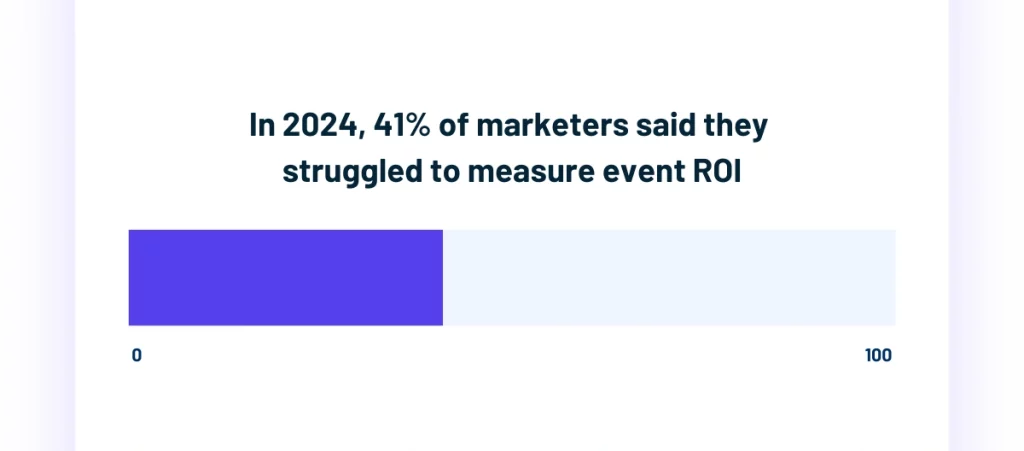
The fix is disciplined event analytics and a meetings-first approach that captures the right event data before, during, and post event.
The math: calculating event ROI you can defend
Start with the baseline formula:
ROI = (Event Revenue − Event Expenses) ÷ Event Expenses × 100
That sets a common language. Then refine with fit-for-purpose ROI metrics:
- Incremental revenue model, quantify revenue generated directly from the event, including influenced deals with a clear attribution window.
- Incremental margin model, apply contribution margin to sales influenced by the event so you can compare programs apples to apples.
- Cost benefit analysis, weigh the full stack of benefits, pipeline influenced, partner value, customer expansion, against event costs.
- Gross margin analysis, assess profitability after subtracting event expenses to highlight what is accretive.
More than half of marketers, 52 percent, said events drove at least half of their company’s closed-won deals in 2024, and 72 percent reported prospects close faster after attending events.
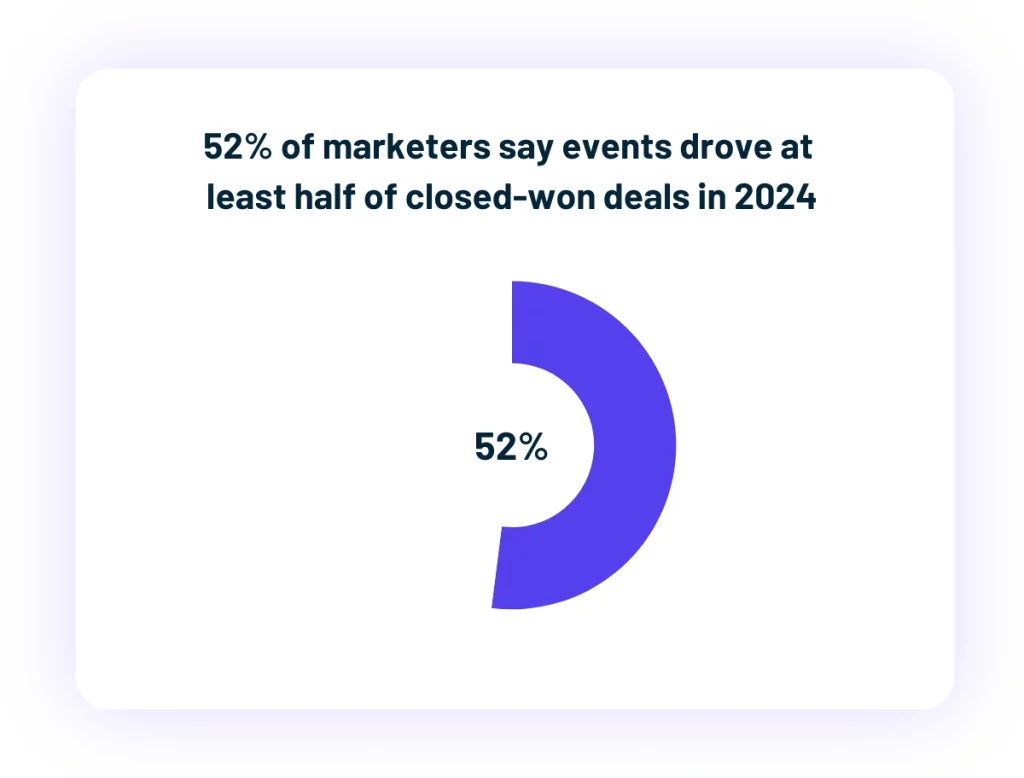
Use these benchmarks to frame expectations, then prove your own outcomes with clean data.
Build a meetings-first measurement plan
You do not need an army to measure event ROI, you need a clear plan to track key metrics.
- Define event objectives and event stage focus, net new pipeline, expansion, or deal acceleration.
- Capture comprehensive data, registrations, session participation, attendee engagement, and meetings set and held.
- Instrument lead generation and leads generated, scan badges, log conversations, and tag next steps.
- Measure attendee satisfaction with short post event surveys, then correlate satisfaction with pipeline movement to quantify the event’s impact.
- Track social media engagement to understand awareness lift and to spot prospects for follow-up.
Use event management software and event apps to make data collection part of the flow. Event technology should help you gather comprehensive data, not create more work.
Attribute value across multiple event touchpoints
Events influence outcomes across the journey, not only at the booth.
- Interactive sessions drive intent. Tag attendance and connect it to meeting outcomes.
- Sponsored content impacts awareness. Pair content interactions with subsequent meeting acceptance.
- Social media and community engagement create hand-raisers. Convert mentions and clicks into scheduled meetings.
- Post event data, email replies, demo requests, and trial sign-ups, ties the event to later-stage actions.
This complete view lets you measure event ROI with context, not just last-touch credit.
Formats matter: in person, virtual, hybrid
In 2025, planners anticipate 59 percent of meetings will be in person, 21 percent virtual, and 20 percent hybrid.
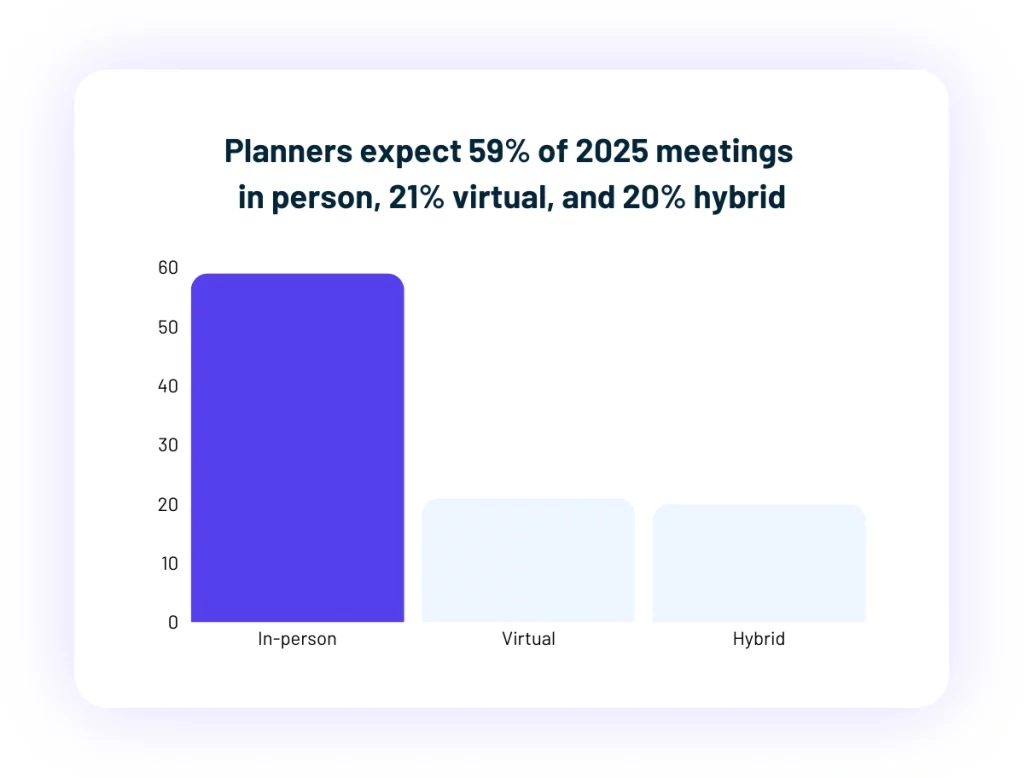
In person drives late-stage acceleration. A virtual event extends reach and lowers acquisition costs. Hybrid can capture both, but only if you set clear attribution rules.
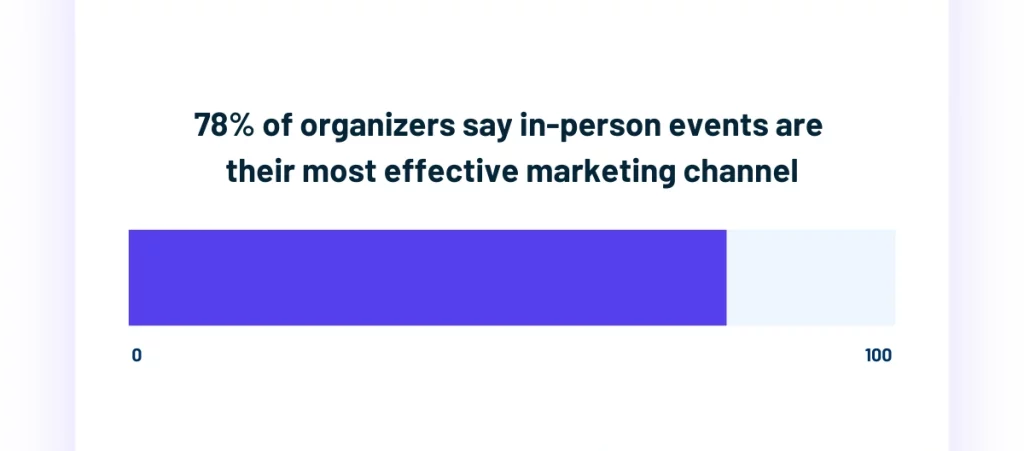
Nearly eight in ten organizers, 78 percent, say in-person events are their most effective marketing channel, which aligns with a meetings-first model.
Short term and long term: connect ROI to customer lifetime value
Event ROI is not only about immediate wins. Customer lifetime value shows how a single conversation compounds over time. Map first-touch, multi-touch, and closed-won against cohorts to quantify extended value. That is how you prove future success and justify bigger bets in future events.
From data to decisions: turn analytics into action
Collecting data is not the goal. Actionable insights are.
- If session participation is high but meetings are low, move your team closer to exit points and shorten CTAs.
- If social media engagement is strong but ticket sales lag, adjust your offer and retarget segments that engaged.
- If attendee satisfaction is high but pipeline is weak, refine topics and add scheduled 1:1 time to increase meeting density.
Analyzing event ROI with these feedback loops is how you improve your event ROI quarter after quarter.
What to track on every program
Create a tight scorecard that leadership understands:
- Event revenue and event expenses, plus net cost.
- Meetings requested, accepted, and held.
- Meeting-to-opportunity, opportunity-to-close, and time to close.
- Sponsorship revenue and partner-sourced leads generated.
- Attendee satisfaction and attendee engagement.
- Social media engagement and website lift during the event window.
When you track key metrics consistently, you can determine the event’s efficiency and compare programs fairly.
How Vendelux helps you maximize and measure event ROI
Vendelux is event intelligence plus meetings automation, built to turn events into meetings, pipeline, and revenue.
- Confirmed attendee data and matching. See which ICP accounts and roles will be on site, then prioritize outreach.
- Meetings automation. Book meetings automatically with on-brand, personalized outreach.
- CRM and MAP integrations. Push attendee lists and meeting outcomes into Salesforce or HubSpot for accurate attribution of event-sourced and event-touched revenue.
- Event analytics you can use. Track key metrics from ticket sales to sponsorship revenue to pipeline created, then export clean reports for stakeholders.
Performance benchmarks: positive response rate 3.5 percent vs 1.5 percent industry, and meeting rate 2.3 percent vs 0.4 percent. This is how teams maximize event marketing ROI and make ROI measurement straightforward.
Frequently asked questions
How do I accurately measure event ROI if our data is fragmented
Centralize event data in your CRM. Use Vendelux to consolidate attendee lists, meetings, and outcomes so ROI calculation reflects real activity across multiple event touchpoints.
Which ROI metrics should I present to finance
Start with ROI calculation, then add incremental revenue model and gross margin. Include pipeline created, conversion rates, and time to close to show the event’s financial performance.
What counts as event revenue beyond ticket sales
Sponsorship revenue, booked meetings that become deals, expansion revenue, and partner-sourced opportunities. Tie each to the event window for clean attribution.
How do I measure attendee satisfaction and link it to ROI
Use short post event surveys and event apps to capture scores, then correlate satisfaction and engagement with meeting acceptance, opportunity creation, and revenue.
How can we improve our event ROI for future events
Analyze post event data for bottlenecks, adjust formats, and increase meeting density. Use confirmed attendee data to focus on ICPs and add more scheduled 1:1 interactions.
Book a demo
Ready to prove event ROI with pipeline and revenue, not guesswork. Book a demo to see how Vendelux turns confirmed attendee data into booked meetings and ties outcomes to ROI in your CRM.